Brenda’s Articles

HOW TO IDENTIFY AND AVOID SCAMS

SCAMMERS ARE IMPERSONATING ALL AGES – ESPECIALLY SENIORS


Even if your caller ID, text or email says your bank, credit union or other personal institutions, be cautious!  Watch out for scammers who want to video call you or take control of your screen.  Don’t click links in texts you were not expecting or share one-time codes and passcodes.    Call the institutions!!


Unsolicited Contact:  If you get an unexpected email, text or call of social media message asking for money or information, could be a scam.


Posing as someone you trust:  Scammers pretend to be figures like government officials, companies, financial institutions, IRS, Courts saying you owe money or a family member in jail – bail them out, or even friends/family.  Don’t trust caller ID  to verify their identity.


Pressure to act fast:  Scammers often use limited-time offers, threats or emergencies to rush you into making quick decisions.


Emotional manipulation:  If someone is playing on emotions like fear, sympathy, or excitement to influence your decisions, it might be a scam.


Requests to pay in specific ways:  Scammers often insist on payment through cryptocurrency, wire transfers, payment apps or gift cards.


THE STOP METHOD CAN HELP PROTECT YOU


These steps can help you stay ahead of scammers:

Stay Cautious:  Always be on alert when someone asks for information or money.

Take Your Time:  Scammers want to rush you.  Slow down and think before you act.

Only Trust Verified Sources:  Double-check information through trusted channels.

Protect Your Info.  Never share personal or financial details unless your are sure who you are dealing with.


FALLING FOR A FAKE JOB LISTING


Some folks get a  message on Linkedin from a “recruiter” at well-known tech company offering a remote position with a great salary.  After the interview and they will hire you, they sometimes send a check to cover equipment costs.  You go to deposit the check but it bounces, and the equipment never arrived.  The recruiter and the company disappear, leaving you unable to get the money back.


DO YOUR RESEARCH: Do an online search for their names along with terms like “scam” or “complaint.” 
BE CARE WITH CHECKS:
Scammers can make them look real before they bounce. 
VERIFY THE COMPANY: 
Remember: scammers use technology and social media to appear credible.  If you think it is fraud – you can also contact the Texas Attorney Office and report.


Brenda Dever-Armstrong, CEO/The Next Horizon Seniors & Military (Veterans/Spouses) Advocate/Resources/Services/Locator/Bus Cell: 210-275-3002/

Web: www.nexthorizonlocators.com

GRANDPARENTS RAISING GRANDCHILDREN

Did you know that over 266,000 grandparents in Texas are primary caregivers for their grandchildren, often stepping in due to parental substance abuse, neglect or incarceration. Organizations like Texas Grandparents Raising Grandchildren (TGRG) provide essential resources, support groups, and advocacy to help these families navigate financial and legal challenges, as many grandparents face poverty, lack of resources and sudden lifestyle changes.


KEY ASPECTS OF GRANDPARENTS RAISING GRANDCHILDREN IN TEXAS:


Need of Support:Many grandparent caregivers face high costs (roughly $23,000) per year and roughly 23% live in poverty, requiring assistance for food, clothing and legal aid.


Key Support Organization:  Texas Grandparents Raising Grandchildren (TGRG) based in San Antonio, offers 24+support groups and resources, assisting over 2,800 families across the state, according to YouTube Video.


Challenges:  The transition is often abrupt leading to immense strain on retirees’ finances, physical health and emotional well-being.


Resources & Rights:  Texas Law Help highlights that caregivers might be eligible for one-time Temporary Assistance for Needy families (TANF) payments and other benefits.


Legal Standing:Texas Family Code Section 153.432 allows grandparents to request visitation or access in certain circumstance, though they do not have automatic, absolute rights.


COMMON REASONS FOR CAREGIVING:


Parents drug or alcohol addition

Neglect or abuse

Incarceration


FEW RESOURCES TO CONTACT:


Temporary Assistance for Needy Families (TANF) (https://texaslawhelp.org)


Grandparents raising grandchildren need specialized legal options.  Explore legal options like guardianship and grandparent power of attorney to ensure well-being of grandchildren you’re raising. (www.texastrustlaw.com)


National Grandparents Day: Parenting Redux (San Antonio Area Foundation) (https://saafdn.org)  (national grandparents day parenting)


The Texas Grandparents Raising Grandchildren Founder is one of our members on one of the agencies as I am a member: Alamo Area Council of Governments (AACOG).  Mexican-American Mercedes Bristol is a single grandmother in Texas raising her five grandchildren and the Founder of Texas Grandparents Raising Grandchildren.  She became an Advocate for grandparents raising grandchildren at City, State and Federal levels.

If you like more information contact Texas Grandparents Raising Grandchildren

San Antonio, TX  Ph: 210-762-3208. They are a nonprofit, tax-exempt organization under IRS Sec. 501©(3). (Always looking for Volunteers)


Brenda Dever-Armstrong, CEO/Owner/CSA/Geriatric Advisor

The Next Horizon Seniors & Military (Veterans/Spouses) Advocate/Resources/Services

Bus. Ph: 210-275-3002

Email: deverb@att.net

www.nexthorizonlocators.com


Mental Health Care Matters

Millions of people in the U.S. are affected by mental illness each year. It’s important to measure how common mental illness is so we can understand the physical, social and financial impact – and show that no one is alone. The numbers are also powerful tools for raising public awareness, stigma-busting and advocating for better health care.

In my business/profession, my team and I have seen more “mental” issues in the last year than ever before. Below are some fast facts:

  • 1 in 5 U.S. adults experience mental illness each year
  • 1 in 20 U.S. adults experience serious mental illness each year
  • 1 in 6 U.S. youth aged 6-17 experience as mental health disorder each year
  • 50% of all lifetime mental illness begins by age 14, and 75% by age 24
  • Suicide is the 2nd leading cause of death among people aged 10-14
  • One in 5 adults experienced mental illness last year

More facts: Texas ranks 50 out of 50 states to access for care.
Texas operates 39 local mental health community health services. (In the San Antonio area, we recommend only 3 Behavior hospitals that do a good service helping those with behavioral issues). We have some excellent behavioral facilities outside of San Antonio.

One can be detained up to 48 hours after arriving unless a judge signs an order of “protective” custody. The most common mental illness in America is:
Anxiety disorder, major depression, & bi-polar

Question asked is: What can get you or a loved one sent to a mental hospital?
If high risk of serious harm to themselves or others and need to be in a place of safety.

One organization for those needing to reach out for help is NAMI – National Alliance on Mental Illness in San Antonio. NAMI provides free peer-led mental health education classes and support groups for individuals living with a mental health condition and their loved ones. NAMI provides advocacy, education, support and public awareness so that all individuals & families affected by mental illness can build better lives. NAMI offers FREE training of six core modules.

PTSD is also common among civilians not just our military men & women. For those who are veterans/spouses of a veteran, we have VA resources we can provide to those needing information and/or care.

This is a topic that needs to be addressed as it is a “crisis” in America.

Brenda Dever-Armstrong, CEO/Owner/CSA/Geriatric Advisor
The Next Horizon Seniors & Military (Veterans/Spouses) Advocate/Resources/Services/Locator (TX & nationwide)
Bus Ph: 210-275-3002
Email: deverb@att.net
www.nexthorizonlocators.com

Know The Signs of (Dementia/Alzheimer) and How To Communicate With Someone With Alzheimer Disease

This is an excellent article for those that may have a loved one with signs of Dementia/Alzheimer. Recently, my team and I are seeing more families with a loved one with these early signs.

Early Detection Matters:
(1) Memory changes that disrupt daily life (early signs forgetting recently learned information).
(2) Challenges in planning or solving problems (Difficulty concentrating or taking longer to complete a task).
(3) Difficulty completing familiar tasks (Complete daily tasks: driving familiar area, managing their budget)
(4) Confusion with time or place: (Cannot remember appointment(s) or location).
(5) New problems with words in speaking or writing (May have trouble following a conversation or joining in a conversation). They may repeat themselves. Trouble finding the right words.
(6) Misplacing things and losing the ability to retrace steps (Placing things in unusual areas). Often accuse others of stealing and re-occurs more often.
(7) Decrease or poor judgement (Demonstrate unusual changes in judgement or decision-making).
(8) Withdraw from work or social activities (They remove themselves from family, hobbies or sports).

COMMUNICATING WITH AN ALZHEIMER/DEMENTIA PATIENT

HELPING THE PERSON COMMUNICATE: Helping someone communicate takes patience and understanding. Here are some Suggestions:
(1) Be calm and supportive. Maintain eye contact and use touch to reassure them. Show them you are listening.
(2) Show your interest in what he/she is saying or feeling.
(3) Pay attention to their voice/gestures for clues to what they are feeling. Sometimes, their emotions are more important than she they are trying to say.
(4) If you do not understand what they are trying to say, encourage them to point or gesture.
(5) If they cannot find a word, they may be less frustrated if you offer a guess.
(6) If they use the wrong word, and you know what they mean, supply the correct word. If this upsets them, do not correct future mistakes!
(7) Do not try to get them to explain as this may make them more upset. If possible just go along with what they are saying or agree with them – less agitated.
(8) Approach the person from the front but some may feel more comfortable if you talk from a handshake distance away.
(9) Keep confusion, distraction and noise to a minimum.
(10) Say your name first then address their name to get their attention.
(11) Speak slowly and distinctly. Use a lower voice pitch to convey sense of calm.
(12) Pay attention to your tone of voice. A person with Dementia/Alzheimer can sense your emotions. Limit the number of “don’t) and avoid harsh or direct orders.
(13) Confrontation may make the situation worse or get the person “worked up.”

Your observation and sensitivity will make a big difference. A hug or kiss can express affection. Remember: Treat the person with dignity and respect.

I suggest for any family or family member to go to www.alz.com. The Alzheimer Association provides so much information about the “Stages” of Alzheimer. They also list the Support Groups throughout Texas for family members to attend – FREE! The support from other families going through this disease with their loved ones can provide “insight” on how they have handled their “loved one” and also received support from outside Speakers.

We need to keep on Congress to provide more “funding” for research….there is NO CURE at this time. The information listed was provided by the Alzheimer Association whom I work very closely with for my updated training working with families who have a loved one with this terrible disease.

Brenda Dever-Armstrong, CEO/Owner/CSA/Geriatric Advisor
The Next Horizon Seniors & Military (Veterans/Spouses) Advocate/Resources/Services/Locator (TX & nationwide)
Bus Ph: 210-275-3002
Email: deverb@att.net
www.nexthorizonlocators.com

Difference Between a Certified Nursing Assistant (CNA) & a Caregiver

Working with so many seniors & military veterans one of many questions asked is: What is the Difference Between a CNA & a Caregiver. Below is a brief explanation:

Basic Duties: Certified nursing assistants, called CNAs and Caregivers are often employed in home health care. Both are eligible to work as aides in hospitals, clinics, and assisted living facilities and Personal Care Homes.

CNAs: A certified nursing assistant is formally trained within a State-Approved educational facility and trained with at least 75 hours. Candidates must take an examination of competency to earn the title of CNA. CAN candidates also commonly have a criminal background check before certification. Graduates of CNA programs can work in the facilities (mentioned above) and can help a patient with the following: Help with bathing, dressing, transferring from bed to walker or wheelchair and oversee the patient take their medication (CNAs cannot administer or fill the medication box but watch the patient take their required medication only). CNAs can also help with cooking, cleaning, laundry, running errands and drive the patient (in the patient’s vehicle) to doctor appointments.

CNAs are usually working with a Caregiver Agency that employees them to be assigned to a patient, either in facilities or in the clients’ personal home. CNAs, if working in a hospital, may have a different job title, such as technician. Duties can include taking vital signs, caring for catheters, transporting patients, or help with discharging patients.

Caregiver: Caregivers provide assistance to the disabled or an elderly with day-to-day functions as helping with laundry, driving, paying bills, help the patient to eat or prepare meals. Many Caregivers are asked by the family to be a “companion” only….meaning, be at their bedside and read to them, or write letters for the patient or just be there to chat. Some Caregivers are employed as live-in companion, with room & board provided by the patient or patient’s family. A Caregiver that is NOT providing medical services needs no formal state-license as they are being more of a companion.

*Information provided by:
Brenda Dever-Armstrong, CEO/Owner/CSA
The Next Horizon Seniors & Military Advocate/Resources/Locator

The Standards of Geriatric Care and Deducting the Cost of a Caregiver (2025)

Today’s facility needs to provide increased levels of both comfort and care. Here are six key criteria geriatric patients are using to measure hospitals and long term care residence.

  1. Quality of Care – This will Never change. Geriatric patients demand and expect top-notch care when they are in the hospital, rehap or Senior Living community. The Baby Boomers are demanding better care and doing their research on their condition and will ask questions to ensure they are receiving the best care from highly qualified personnel.
  2. “Privacy” – I Want A Door. HIPPA laws have led to a construction boom as hospital administrators strive to make Waiting Rooms, Treatment Bays, Exam Rooms and other areas of hospitals HIPPA compliant. They do not want to Share a Room!
  3. Room Comfort – Some hospitals are acting like hotels. More space for family to visit their loved one – some are like suites and provide additional luxuries. Requesting Unrestricted visiting hours, and on-site facilities for eating.
  4. Food Quality – Healthy and Tasty Diet. Emotional health is connected to physical health and physical health connected to a healthy diet. Providing healthier foods and diet will make the patient happier and healthier – improve & go home faster.
  5. Personnel with Professional and Caring Personalities. Patients rely heavily on facilities employees. When patients are ill or frightened, they need to feel confident they can depend upon staff to treat them correctly and with respect. Patients demand knowledgeable, efficient, comforting and – above all – pleasant staff.
  6. A Calm and Clean Environment. Every administrator knows that the better a patient feels emotionally, the faster they will heal physically. The atmosphere of the facility is one of the “key” things patients look for when deciding on a healthcare facility. Geriatric patients want tranquil environments that are tastefully decorated, cheerful and clean.

While these are not the only standards used to select healthcare facilities they are some of the Most important considerations. Facilities need to provide their patients in innovative ways, beyond their clinical needs, never forgetting that the quality of care and medical service is the Primary concern.

*I highly recommend and I do for my clients is do a national and state background check/rating on each facility, skilled nursing/rehab/hospital, physicians as how they are rated. The ratings range from 1to 5 stars: 5 stars being the top rating. Read the reviews as well. I then call and ask for the Admission Director or Business Director to ask my questions regarding their facility/community. Once you feel comfortable that facility is at least rated 3.8 or more…schedule a tour. Make a list to ask your questions. Then go back unannounced and tour that facility again before, during or late afternoon to see if the standards are as they have indicated during your tour.

Can Someone Deduct the Cost of a Caregiver? With tax time upon us this is asked frequently. Our parent has a personal caregiver who works for them full time in their home. The parent(s) pay the cost of approx $7,000 or more per month out of their own income. Can they deduct the cost as a medical expense on their income tax?
Answer: YES, assuming they are “qualified long term care services.” To satisfy the IRS, one must have to verify primarily by a carefully written letter from her/his personal physician that: (a) she/he is chronically ill (b) the services are provided in accordance with the physician’s plan of care, and © she/he are required care and supervision to protect them from threats to health and safety due, for example: to her/his diminished capacity. A CPA will rely on Section 213 of the IRS Code in determining whether or not their care qualifies.

Note: Physicians do not think about tax deductions when they care for their patients. Its OK to tell them about this opportunity and about the need for an appropriate letter or written plan. Also, these expenses can only be itemized deductions if they exceed 7.5% of the patient(s) adjusted gross income. *Remember to issue 1099s for each of the Caregivers and submit to the IRS at year end. Check with your CPA.

Brenda Dever-Armstrong, CEO/Owner/CSA/Geriatric Advisor/Lifetime Advocate
The Next Horizon Senior & Military (Veterans/Spouses) Services/Resources/Locator, www.nexthorizonlocators.com

Alzheimer Treatments: What’s on the Horizon

What is on the Horizon for Alzheimer Treatments: Despite many promising leads, new treatments for Alzheimer’s are slow to emerge. Current Alzheimer’s treatments temporarily improve symptoms of memory loss and problems with thinking and reasoning. These Alzheimer’s treatments boost the performance performance of chemicals in the brain that carry information from one brain cell to another. They include Cholinesterase inhibitors and the medicine Memantine (Namenda). However, these treatments don’t stop the underlying decline and death of brain cells. As more cells die, Alzheimer’s disease continues to progress.

Experts are cautious but “hopeful” about developing treatments that can stop or delay the progression of Alzheimer’s. Future Alzheimer’s treatments may include a combination of medicines. This is similar to treatments for many cancers or HIV/AIDS that include more than one medicine.

A Few of the Strategies Currently Being Studied: Taking aim at Plaques: Some of the new Alzheimer treatments target clumps of the protein beta-amyloid, knows as plaques, in the brain. Plaques are a characteristic sign of Alzheimer’s disease. Medicines known as monoclonal antibodies may prevent eta-amyloid from clumping into plaques. They may remove beta-amyloid plaques that have formed. They do this by helping the body clear them from the brain. They mimic the antibodies your body naturally produces as part of your immune system’s response to foreign invaders of vaccines. The US Food and Drug Admin (FDA) has approved (Leqembi) and Donanemab for people with mild Alzheimer’s disease and mild cognitive impairment.

Preventing Destruction: A medicine initially developed as a possible cancer treatment – Saracatinib – now being tested in Alzheimer’s treatment underway now.

Studying the Heart-Head Connection: A number of studies are exploring how best to build on that brain linked to heart and blood vessel health. The risk of developing dementia appears to increase as a result of many conditions that damage the heart or arteries. This includes: high blood pressure, heart disease, stroke, diabetes and high cholesterol. Developing new medicines is a slow process. The pace can be frustrating for people with Alzheimer’s and their families.

I hope this helps with some of the understanding of new treatments and more research. Since majority of my client(s)/patients have some stage of Dementia/Alzheimer, my education working with the Alzheimer Association and Specialists who study and treat this disease helps me to guide those families with their loved ones the resources and services to help their loved one(s) to still have the quality of life. (Info provided by the Mayo Clinic)

Brenda Dever-Armstrong, CEO/Owner/CSA/Geriatric Advisor/Lifetime Advocate
The Next Horizon Senior & Military (Veterans/Spouses) Services/Resources/Locator
Business Cell: 210-275-3002
Email: deverb@att.net

Senior Article Nov: Veterans Day Facts and Information

Which is the Correct Spelling of Veterans Day:
Veterans Day does not include an apostrophe but does include an “s” at the end of “veterans” because it is not a day that “belongs” to veterans, it is a day for honoring all veterans.

What Day of Their Week is Veterans Day Observed:
Veterans Day is always observed officially on 11 November. However, when Veterans Day falls on a weekday, many communities choose to hold Veterans Day parades or other celebrations on the weekend before or after 11 November so more folks can participate.

What Is the Difference Between Veterans Day and Memorial Day:
Many folks confuse Memorial Day and Veterans Day. Memorial Day is a day for remembering and honoring military personnel who died in the service of their country, particularly those who died in battle or as a result of wounds sustained in battle. While those who died are also remembered, Veterans Day is the day set aside to thank and honor all those who served honorably in the military – in wartime or peacetime. In fact, Veterans Day is largely intended to thank living veterans for their service, to acknowledge that their contributions to our nation security are appreciated, and to underscore the fact that all those who served-not only those who died-have sacrificed and done their duty.

Why are Red Poppies Worn on Veterans Day, And Where Can They Be Obtained:
The wearing of Poppies in honor of America’s war dead is traditionally done on Memorial Day, not Veterans Day. The practice of wearing of Poppies takes its origin from the poem in Flanders Fields, written in 1915 by John McCrae. A large number of Veterans organizations distribute Poppies annually on Memorial Day. You can find veterans groups on VA’s Veterans Day web page or Veterans Organization link on their web page.

Thank you all who have served, died serving our country, and serving today! God Bless America!

Brenda Dever-Armstrong, CEO/Owner/CSA/Geriatric Advisor
The Next Horizon Senior & Military (Veterans/Spouses) Advocate/Resources/Services/Placement
The Next Horizon Seniors & Military Advocate – https://nexthorizonlocators.com/
National Register Directory (NRD) – https://www.nrd.gov/

Medicare Open Enrollment – 15 October – 7 December 2024

The Medicare Open Enrollment starts from 15 October – 7 December 2024. This time frame gives you an opportunity to review your plan choice and make changes, if necessary. Review your current plan. Medicare has added more accepted care. Now, if your Veteran spouse served 20 years or more – after age of 65 you are covered with Tricare For Life…. Best coverage – Medicare (Primary) Tricare For Life (Secondary) – you do NOT need an additional medical insurance policy.

Major Medicare Changes For 2025 And How They Will Impact Your Coverage:

In 2025, Medicare will undergo some of the most significant changes in a generation. Changes to Medicare will include a $2,000 limit on out-of-pocket Part D drug costs, an opt-in payment plan, and some potential broad changes in Medicare Advantage plans.

Key Takeaways: Medicare changes include the elimination of the “donut hole” and a limit on how much you’ll pay out of pocket for covered prescription drugs.

There will be a new payment plan you can opt into to spread out your medication costs. A new optional payment plan can ease budgeting, particularly for expensive drugs. Depending upon the cost of your drug, remember out-of-pocket expenses are capped at $2,000 annually, you won’t pay more than $166.67 per month ($2,000 divided by 12).

In response to these changes, insurers will likely change pricing and coverage for Medicare Advantage and Part D plans.

Medicare Advantage beneficiaries should receive a letter in the middle of 2025 about unused benefits.

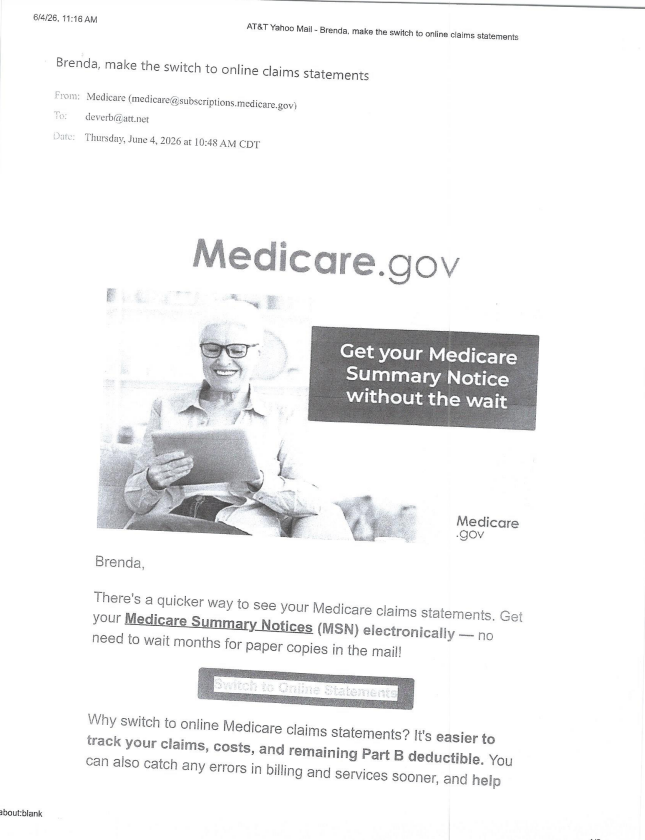
Other changes impact the availability of mental health care, prior authorization use, and unpaid caregiver support for Medicare recipients with dementia. Medicare aims to enhance access to these critical services.

*Check with your current medical plan and contact them with questions you may have or go onto the website: www.medicare.gov

Brenda Dever-Armstrong, CEO/Owner/CSA/Geriatric Advisor/Lifetime Advocate
The Next Horizon Senior & Military (Veterans/Spouses) Services/Resources/Locator

The Standards of Geriatric Care and Deducting the Cost of a Caregiver

Today’s facility needs to provide increased levels of both comfort and care. Here are six key criteria geriatric patients are using to measure hospitals and long term care residence.

  1. Quality of Care – This will Never change. Geriatric patients demand and expect top-notch care when they are in the hospital, rehap or Senior Living community. The Baby Boomers are demanding better care and doing their research on their condition and will ask questions to ensure they are receiving the best care from highly qualified personnel.
  2. “Privacy” – I Want A Door. HIPPA laws have led to a construction boom as hospital administrators strive to make Waiting Rooms, Treatment Bays, Exam Rooms and other areas of hospitals HIPPA compliant. They do not want to Share a Room!
  3. Room Comfort – Some hospitals are acting like hotels. More space for family to visit their loved one – some are like suites and provide additional luxuries. Requesting Unrestricted visiting hours, and on-site facilities for eating.
  4. Food Quality – Healthy and Tasty Diet. Emotional health is connected to physical health and physical health connected to a healthy diet. Providing healthier foods and diet will make the patient happier and healthier – improve & go home faster.
  5. Personnel with Professional and Caring Personalities. Patients rely heavily on facilities employees. When patients are ill or frightened, they need to feel confident they can depend upon staff to treat them correctly and with respect. Patients demand knowledgeable, efficient, comforting and – above all – pleasant staff.
  6. A Calm and Clean Environment. Every administrator knows that the better a patient feels emotionally, the faster they will heal physically. The atmosphere of the facility is one of the “key” things patients look for when deciding on a healthcare facility. Geriatric patients want tranquil environments that are tastefully decorated, cheerful and clean.

While these are not the only standards used to select healthcare facilities they are some of the Most important considerations. Facilities need to provide their patients in innovative ways, beyond their clinical needs, never forgetting that the quality of care and medical service is the Primary concern.

Can Someone Deduct the Cost of a Caregiver? With tax time upon us this is asked frequently. Our parent has a personal caregiver who works for them full time in their home. The parent(s) pay the cost of approx $4,000 per month out of their own income. Can they deduct the cost as a medical expense on their income tax?

Answer: YES, assuming they are “qualified long term care services.” To satisfy the IRS, one must have to verify primarily by a carefully written letter from her/his personal physician that: (a) she/he is chronically ill (b) the services are provided in accordance with the physician’s plan of care, and © she/he are required care and supervision to protect them from threats to health and safety due, for example: to her/his diminished capacity. A CPA will rely on Section 213 of the IRS Code in determining whether or not their care qualifies.

Note: Physicians do not think about tax deductions when they care for their patients. Its OK to tell them about this opportunity and about the need for an appropriate letter or written plan. Also, these expenses can only be itemized deductions if they exceed 7.5% of the patient(s) adjusted gross income. *Remember to issue 1099s for each of the Caregivers and submit to the IRS at year end. Check with your CPA…..

Brenda Dever-Armstrong, CEO/Owner/CSA/Geriatric Advisor/Lifetime Advocate
The Next Horizon Senior & Military (Veterans/Spouses) Services/Resources/Locator